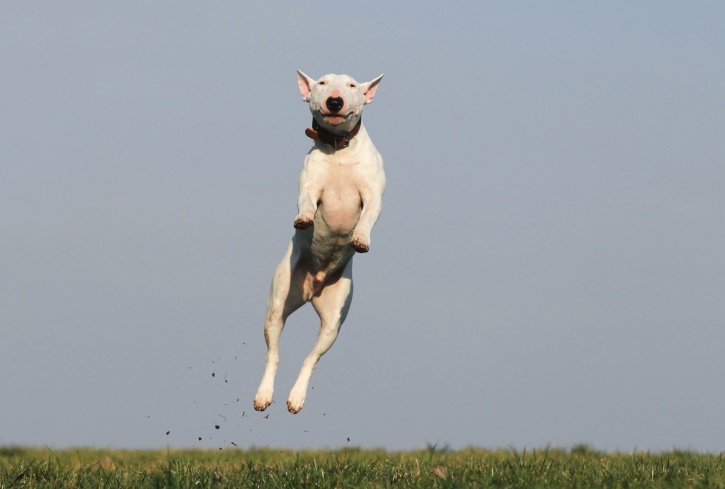
Jumping is attention-seeking, not dominance, and the fix is to remove the reward and teach a replacement behavior. When jumping gets no attention at all and sitting gets all of it, most dogs stop jumping within a few weeks.
The move most owners use to stop jumping, pushing the dog off, is the very thing that rewards it. To a dog, hands on the chest are attention, and attention is the payoff.
Pit bulls are loving dogs, and jumping comes from that love: they want to be close to your face. The problem is that a 60-pound dog launching itself at a guest is dangerous for elderly or unstable people, and a habit that gets worse the longer it is allowed. The good news is that it is one of the easiest behaviors to fix, because the fix is simple and the dog wants the reward you are offering.
Why pit bulls jump
They want to greet you face to face. A pit bull cannot lick the face of an adult without jumping up, and face licking is a greeting behavior in dogs.
Excitement. Pit bulls are enthusiastic dogs, and greetings are the most exciting part of the day. A dog that has been alone all day, or that hears the doorbell, is flooded with excitement.
Attention, even negative attention. This is the one most owners miss. A dog that jumps gets looked at, talked to, and touched, even if the touching is pushing it away and the talking is “no, down, get down.” All of it is attention, and attention is the reward that keeps the jumping going.
Lack of impulse control. Puppies jump because they have not learned to control themselves yet. Adult dogs jump because nobody taught them to, or because the behavior was allowed when they were small and became a habit when they were big.
A note on the old explanation. The live version of this post said dogs jump “to test their dominance” and “insert himself higher in the pack.” That idea is outdated. Modern trainers describe jumping as excitement plus reinforced attention-seeking, and there is no pack rank at stake. A dog that jumps on you is not challenging your authority. It is excited and it has learned that jumping gets a reaction.
What NOT to do
Do not knee the dog in the chest. The knee-block method is contested. One JustAnswer veterinary answer describes a raised-knee block, but it comes with a clear warning: “DO NOT KNEE THE DOG.” Force-free trainers say to withdraw attention instead. The consensus is that blocking with a body part risks injuring the dog, and it can make an excitable dog more aroused or fearful.
Do not step on the dog’s back feet. This is an old trick, and it is a bad one. It can injure the dog, and it teaches the dog that people are unsafe around its feet.
Do not yell, push off, or shove. Yelling is attention, and pushing is attention with contact. Both reward the jump. Shoving a jumping dog can also knock it off balance.
Do not use “alpha” corrections. Alpha rolls, scruff grabs, and other dominance-based corrections do not teach a dog to stop jumping. They teach the dog to be afraid of its owner, and a fearful dog is a dog that may bite. There is no shortcut through intimidation.
The method: remove the reward, teach the replacement
First, remove the reward. When the dog’s paws leave the floor, all attention stops. Turn away, fold your arms, and look at the ceiling. If the dog keeps jumping, leave the room for 30 seconds, then come back and try again. The dog will jump a few more times, because the old trick used to work, and then it will try something else.
Second, teach the replacement. The rule is “four paws on the floor”: attention only happens when all four paws are down. The moment the dog’s paws hit the floor, praise it calmly and give it a treat. The moment the dog sits, the praise gets better. You are not just stopping a behavior. You are building a new one: “sitting gets me everything jumping used to get me.”
Everyone in the house has to follow the same rule. This is where most jumping fixes fail: if one person lets the dog jump on them, the dog learns that jumping sometimes works, and a behavior that sometimes works is the hardest kind to stop.
Step-by-step: polite greetings at the door
The door is where jumping is worst, because the door is where the excitement is highest. Teach greetings as a protocol.
- Before guests arrive, put the leash on the dog and have it sit or go to its place. A leash gives you control without grabbing the dog.
- Guest enters. The dog stays on its place or in its sit. If the dog gets up, calmly return it.
- Wait for calm. The guest ignores the dog completely until it is calm and settled. No eye contact, no talking, no petting.
- Release to greet. When the dog is calm, release it to greet the guest. If the dog jumps, the guest turns away and the greeting restarts from step 3.
- Practice with family first. Run the protocol with people the dog already knows, then with friends, then with strangers.
Stepping on the leash is a useful trick for greetings. Step on the leash so there is just enough slack for the dog to stand and sit, but not enough to jump. The leash does the work, and you do not have to touch the dog at all.
The video in the original post shows this method in action: CPDT-KA trainer Adrienne Farricelli, of Brain Training for Dogs, works with Maggie, a pit bull that jumps on guests, and you can see the turn-away and the sit being rewarded in real time.
Training “sit to greet”
An automatic sit is the long-term fix: a dog that sits when a person approaches, without being asked, because sitting is what gets the greeting.
Start in a quiet room with no guests. Ask for a sit, then reward it, and repeat until the sit is instant. Then add a person approaching: a family member walks toward the dog, and the dog holds the sit. If the dog stands or jumps, the person turns and walks away.
Drop treats on the floor to keep the dog’s focus down: a treat on the floor teaches the dog that good things happen at ground level. Build duration gradually: a sit that lasts two seconds, then five, then ten, then a full greeting.
“Stoop to their level” still helps. Kneel or bend down so the dog does not need to jump to reach you. After the greeting, if the dog jumps when you stand up, say “get down” calmly and do not pet the dog until all four paws are on the floor.
Guests and kids: the safety plan
Jumping is a training problem with adults and a safety problem with children and elderly people. A pit bull that jumps on a small child can knock the child over, and a dog that jumps on an older adult can cause a fall.
For greetings with children and elderly visitors, manage the situation instead of hoping the training holds. Keep the dog on a leash, behind a baby gate, or in another room until the excitement of arrival has passed. Let the dog greet the visitor only when it is calm. Never leave a jumping dog unsupervised with a frail person.
Teach children the same rule as adults: turn away and ignore the dog when it jumps, and pet it only when all four paws are on the floor. Children often accidentally reward jumping, because they squeal and wave their arms. A calm child gets a calm dog.
When jumping won’t stop
If the dog is still jumping after weeks of consistent work, look for the weak link.
Someone in the house is still allowing it. One person who lets the dog jump on them undoes everyone else’s work.
The dog is not getting enough exercise or mental stimulation. An over-aroused dog jumps more. Add a long walk, a training session, or a puzzle feeder before guests arrive.
The training is inconsistent. If the dog gets attention for jumping on Tuesday and gets ignored on Wednesday, the dog will keep jumping. The rule has to be the same every time, from every person, in every situation.
The dog needs professional help. If the jumping continues despite consistent work, or if it is getting worse, a certified trainer can spot what you are missing. Look for a trainer who uses force-free methods.
Jumping vs aggression
Jumping is almost always excitement, not aggression. A dog that jumps on people wants to be near people, which is the opposite of an aggressive dog.
There are red flags that mean something else is going on. A dog that jumps with a stiff body, a hard stare, or growling is not greeting you. A dog that jumps and bites hard enough to break skin is not playing. A dog that jumps only in specific situations, like when someone approaches its food bowl or its favorite person, may be guarding, not greeting. Those behaviors need a trainer or a veterinary behaviorist, not a greeting protocol.
Frequently asked questions
Why does my pit bull jump on people? Excitement and attention. The dog wants to greet you face to face, and jumping has been rewarded with attention in the past.
Should I knee my dog in the chest to stop jumping? No. The knee-block method is contested and risks injuring the dog. Force-free trainers recommend withdrawing attention instead.
How long does it take to stop a dog from jumping? Most dogs improve within a few weeks of consistent work, but the habit can take a couple of months to fully break.
Does stepping on the leash work? Yes, as a management tool. Step on the leash with just enough slack for the dog to stand and sit, but not enough to jump.
What about jumping on kids? Manage it, do not just train it. Keep the dog leashed or behind a gate for greetings with children until the habit is solid.
If you want the full step-by-step method with a training plan, the free TrainPetDog course covers jumping and greeting manners in detail. Get the free course here.
This article is general information, not veterinary or behavioral advice. If your dog’s jumping comes with growling, a stiff body, or bites that break skin, talk to a certified trainer or a veterinary behaviorist.